
The tiniest thing you can do that means everything
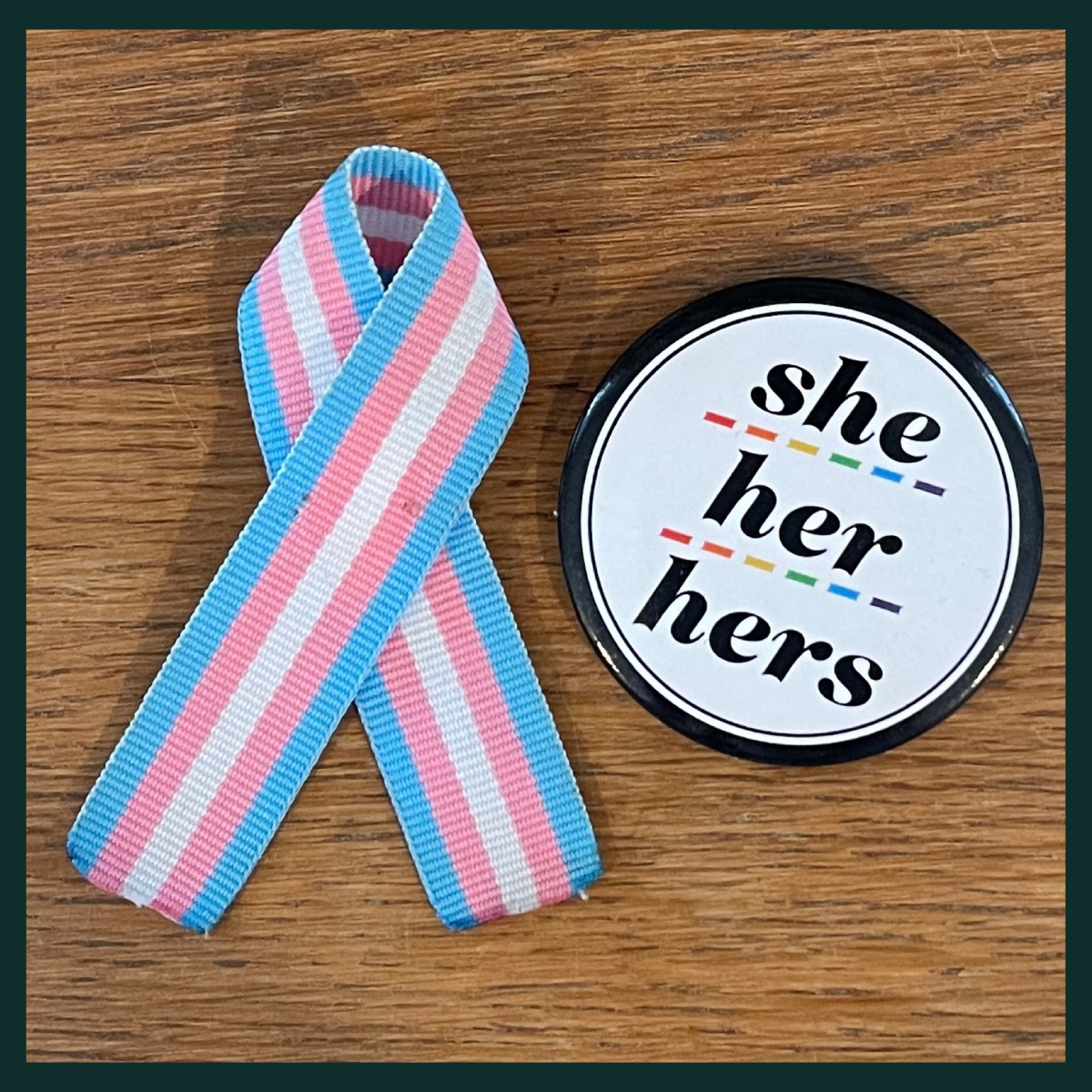
If you've ever stumbled over someone's pronouns and felt unsure what to do, this one's for you.
Let’s start with what a pronoun is. They’re the words we use to talk about people without saying their name. Examples are “he,” “she,” or “they.” Instead of saying, "Henry went to the store," we could use Henry’s pronoun and say, "He went to the store."
Now, pronouns aren’t just grammar tools. Pronouns tell the world who we are. Using the right pronouns isn’t just important for some people; it’s important for everyone.
Why should you care about pronouns?
When we use the right words, including the right pronouns, we create spaces where people feel safe and valued. That’s not just true for individuals; it’s true for entire communities. Studies show that when trans and nonbinary people are addressed with the correct pronouns, their mental health improves. They feel less anxious, less depressed, and more confident. It’s amazing how something as small as a word can make such a big difference.
How do you know what someone's pronouns are?
First of all, you can't tell by looking at someone. Some people might “look male” to you but they identify as female. Others might look like a stereotypical girl but don't feel that either female or male fits how they feel on the inside. Some people even fluctuate how they feel day to day. We already use gender-neutral pronouns all the time when we don’t know someone’s gender, like “the delivery driver is here, they knocked at the door.”
Others change their name and pronouns to help them feel their best. It's an important practice in allyship to normalize asking and sharing pronouns.
A friend of mine named Paul, used to teach theater in an after-school program. One year, Paul had a student who was questioning their gender identity. It seemed like every week this student was using different pronouns, trying to figure out who they were. Discussing this became a regular part of their Mondays. Paul would check in with the student, asking how they were feeling about their identity. One day the student confided in Paul. “You’re the only person who ever asks me about my gender or pronouns. Most people ignore it or tell me I’m being annoying.”
Can you imagine how that must have felt? Just trying to understand yourself, while being met with indifference, or rejection?
Now, let’s be real: mistakes happen.
We’re human. It takes time to adjust to someone’s new pronouns and it's the effort that matters. If you make a mistake, like using the wrong pronoun, it’s not the end of the world. What matters is how you respond. Simply apologize, correct yourself, and move on. It’s that easy. Try to remember the correct pronouns in the future and if you forget it's ok to ask again. People can tell the difference between an honest mistake and intentional disregard.
Several years ago, I was introduced to some new music by someone named Tash Sultana. Tash is a one-person band, plays several instruments at once and is incredible. This person uses they/them pronouns. When I talked about them to other people, I would say “she’s a one-person band but uses they/them pronouns." Then I would proceed to use she/her when talking about Tash. It took me a while to get used to it and years later I still use the wrong pronouns on occasion.
Personally, I try to remember to share my pronouns anywhere I can. This is when introducing myself to a new group of people and in the bio of my social media profiles. This is how I help others feel safe around me.
I love seeing someone display or share their pronouns. They appear to be safe, someone who I can feel I can be my authentic self around. Sometimes I tell them “hey I like seeing your pronouns in your email signature” or wherever I saw them. A compliment may reinforce them using their pronouns in the future. Sharing your pronouns can help create an environment where others feel comfortable sharing theirs, too.
Misgendering can have serious consequences for a person’s self-confidence and overall mental health. Using someone’s correct pronouns signals that they’re in an affirming environment. When someone misgenders another person, they also run the risk of outing them to other people.
What can we do to make pronouns a regular and natural part of our conversations?
You can start by practicing with your friends. It will get easier the more time you spend on it.
What if you don’t feel comfortable sharing your pronouns? That’s ok, Not everyone is, including transgender, nonbinary, or people questioning their gender. Respect those who offer to share their pronouns and those who do not. No one should be forced to comply, but definitely not mock or belittle it.
Even allies may be uncomfortable sharing for fear that it’s not their place to share. I recently spoke with two cisgender, straight women, on separate occasions. They both said that they didn’t feel it was their place to share their pronouns when introducing themselves to a new group of people. They felt they would be intruding into a place and didn’t want to insert themselves into the conversation of which they did not belong. They consider themselves to be allies. They didn’t understand what I was trying to get across.
My point was that it is very important for cisgender people to be the ones who are first to bring pronouns into a conversation. It doesn’t need to be a whole thing. It can simply be “hi, I’m Audrey Schroder, I use she/her pronouns.” And then move on to the next person. What this does is for anyone in the group who may identify as transgender or non-binary is allow them to share their pronouns, along with everyone else. They don’t have to make a big deal out of it. It’s super easy, and a great way to help people feel seen. Then it’s just a regular habit, and you don’t have to think about it.
Now, I don't expect you to remember everything I’ve shared here. It is a lot of information and can be confusing. Just remember that you can respect people without necessarily understanding them. Simply letting the people around you know that you are supportive, open, and eager to learn is a helpful start.
Pronouns are small but powerful words. They might seem insignificant on their own, but they have the power to show respect and make people feel seen.✨
